
HERBAL MONOGRAPH
Jatropha gossypiifolia L.
1. Botanical Name
Jatropha gossypiifolia L.
2. Family
Euphorbiaceae
(Spurge family)
3. Common Names
- Bellyache Bush
- Cotton-leaf Physic Nut
- Black Physic Nut
- Purging Nut
- Red Fig-nut
- American Purging Nut
(Common names vary by region across Africa, the Caribbean, and the Americas.)
4. Plant Description (Botanical Identification)
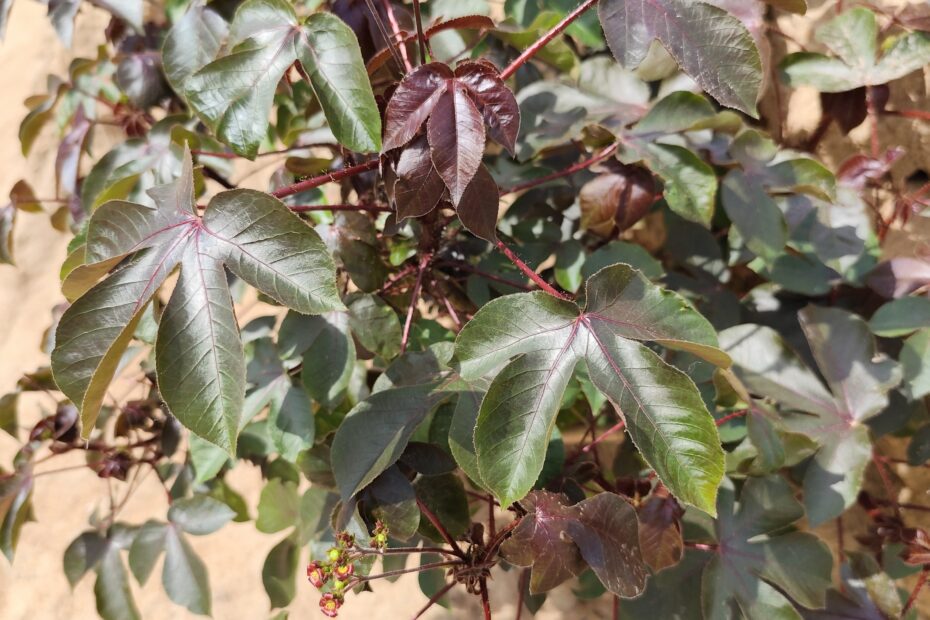
Jatropha gossypiifolia is a perennial woody shrub or small tree, typically reaching 2.5 – 4 metres in height. The plant is erect, branched, and exudes a milky latex sap when cut.
- Leaves: Palmately lobed (usually 3 – 5 lobes), soft-textured; young leaves often appear purplish or dark green, sometimes sticky to the touch
- Stems: Reddish to purplish, smooth, latex-bearing
- Flowers: Small, showy flowers ranging from deep red to purple, often with yellow centres, borne in clusters
- Fruit: Three-lobed capsules containing two to three black seeds
- Seeds: Highly toxic
Correct identification is essential, as the genus Jatropha contains multiple species with varying chemical and toxicological profiles.
5. Habitat and Distribution
- Native Range: Tropical regions of Central America, South America, and the Caribbean
- Naturalised: Widely across tropical and subtropical regions including West and East Africa, South Asia, Southeast Asia, Australia, and the Pacific Islands
- Habitat: Roadsides, open woodland, riverbanks, scrubland, abandoned fields, and disturbed soils
- Ecology: Hardy, drought-tolerant, adaptable to poor soils; considered invasive or noxious in some regions
6. Parts Used (Traditional Context)
- Leaves
- Stem bark
- Latex (sap)
- Seeds (historically, with high risk)
Note: Seeds and latex are the most toxic parts of the plant.
7. Traditional Actions (Ethnomedical)
Traditionally attributed actions include:
- Purgative
- Emetic
- Antimicrobial
- Anti-inflammatory
- Analgesic
- Anthelmintic
- Febrifuge
- Wound-healing (topical)
These actions are based on traditional and ethnobotanical use, not clinical validation.
8. Traditional Uses
Internal Uses (Historically Recorded – High Risk)
- Strong purgative for constipation
- Treatment for intestinal parasites
- Management of fever and systemic cleansing
- Traditional remedies for digestive disorders such as abdominal pain and dysentery
Internal use is associated with significant toxicity and is not recommended without expert supervision.
External Uses
- Poultices for wounds, ulcers, and sores
- Applications for skin conditions such as eczema, scabies, ringworm, and fungal infections
- Treatment of inflammation, swelling, bruises, and localized pain
- Traditional use for insect bites and stings
External applications were more common and considered safer when properly prepared.
Ethnobotanical Note: Traditional Use for Oral Thrush (Historical Reference Only)
Some ethnobotanical records note that the latex (sap) of Jatropha gossypiifolia was traditionally used in extremely minute amounts for oral thrush in infants in certain cultures.
This practice typically involved:
- Touching a finger or cloth to the latex
- Then briefly touching the affected area in the mouth
Importantly, traditional practitioners emphasized:
- Extreme dilution or trace exposure
- Single, controlled application
- Practitioner experience and cultural context
This use was based on the plant’s strong antimicrobial properties, not nutritional or systemic effects.
9. Phytochemical Constituents
Identified bioactive compounds include:
- Diterpenoids: Jatropholones (A, B, C)
- Alkaloids: Including jatrophine
- Flavonoids: Quercetin, kaempferol, rutin
- Triterpenoids: Lupeol, betulinic acid
- Phenolic compounds: Gallic acid, ellagic acid
These compounds contribute to the plant’s potency and toxicity.
10. Pharmacological Activity (Preclinical)
Laboratory and animal studies have reported:
- Anti-inflammatory effects
- Analgesic activity
- Antimicrobial and antifungal activity
- Antioxidant properties
- Antidiarrheal and antipyretic effects
- Neuropharmacological and sedative effects
No robust human clinical trials confirm safety or efficacy.
11. Toxicology and Safety Profile
Jatropha gossypiifolia is classified as a toxic medicinal plant.
Toxic Parts:
- Seeds
- Fruit
- Latex sap
Reported Toxic Effects:
- Severe abdominal pain
- Nausea, vomiting, diarrhea
- Gastrointestinal irritation and dehydration
- Possible neurological or cardiovascular effects in severe exposure
- Children and animals are particularly vulnerable.
12. Traditional Preparations (Historical / Cultural Context)
Leaf Decoction (External Use):
- Leaves were boiled in water to prepare washes or compresses for skin conditions and wounds.
- Poultice
- Fresh leaves crushed and applied to affected areas for inflammation or injury.
Seed Oil (Historical Use Only):
- Oil expressed from seeds was historically used as a purgative; this practice carries high toxicity risk and is not recommended.
13. Contraindications and Precautions
- Not suitable for internal self-medication
- Avoid during pregnancy and breastfeeding
- Avoid use in children
- Avoid contact with eyes and mucous membranes
- Do not confuse with other Jatropha species
- Always use protective measures when handling latex
15. Summary
Jatropha gossypiifolia is a historically significant but high-risk medicinal plant. Its traditional use reflects a time when plant knowledge was guided by experience, restraint, and cultural wisdom. While it possesses notable bioactivity, its toxicity profile demands caution, respect, and professional oversight.
This plant stands as a reminder that not all medicinal plants are suitable for modern or casual use.
References
- Burkill, H. M. The Useful Plants of West Tropical Africa, Vol. 2. Royal Botanic Gardens, Kew.
- Iwu, M. M. Handbook of African Medicinal Plants. CRC Press.
- West African Herbal Pharmacopoeia. Association for African Medicinal Plants Standards (AAMPS).
- Duke, J. A. Handbook of Medicinal Herbs. CRC Press.
- Sabandar, C. W. et al. Phytochemistry Reviews.
- Silva, R. M. et al. Journal of Ethnopharmacology.
- National Center for Biotechnology Information (NCBI), PubMed Central.
- WHO Monographs on Selected Medicinal Plants.
This article is copyrighted by Ital is Vital, 2025. Want to re-post this article? Visit our guidelines.
DISCLAIMER: THIS WEBSITE DOES NOT PROVIDE MEDICAL ADVICE
The information, including but not limited to, text, graphics, images and other material contained on this website are for informational purposes only. The purpose of this website is to promote broad consumer understanding and knowledge of various health topics. It is not intended to be a substitute for professional medical advice, diagnosis or treatment. Always seek the advice of your physician or other qualified health care provider with any questions you may have regarding a medical condition or treatment and before undertaking a new health care regimen, and never disregard professional medical advice or delay in seeking it because of something you have read on this website.