
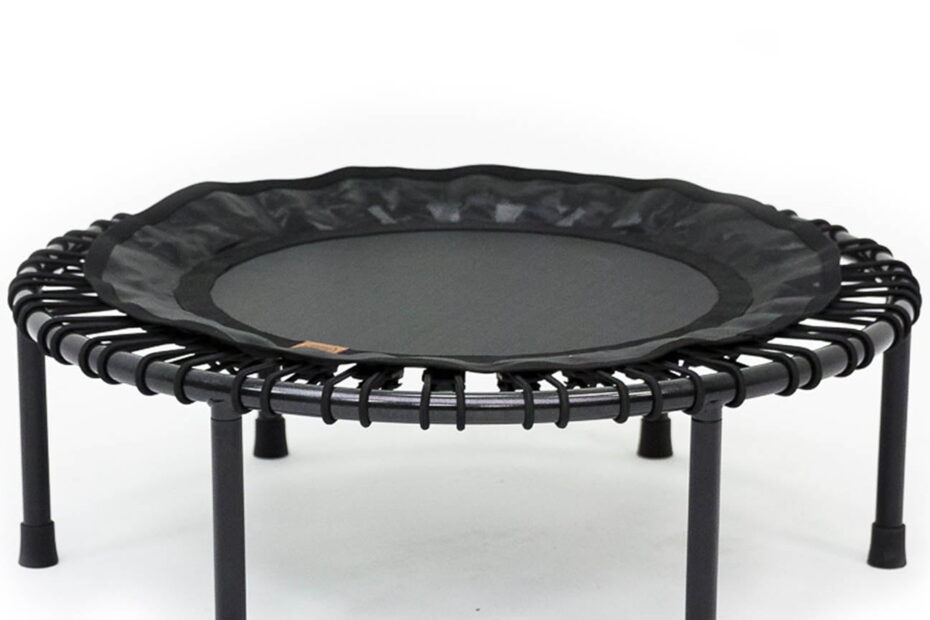
Rebounding – the simple act of bouncing on a mini-trampoline (also called a rebounder) – has exploded in popularity within natural health, functional medicine, and longevity communities. NASA famously studied rebounding in the 1980s and found it to be 68% more efficient than jogging for cardiovascular fitness while being dramatically gentler on joints. Today, thousands of people credit daily rebounding sessions with better energy, reduced swelling, stronger bones, sharper balance, and even improved immune function.
Yet not everyone can (or wants to) jump on a trampoline. Joint replacements, severe arthritis, balance issues, vertigo, recent surgery, extreme age, or simply lack of equipment can make traditional rebounding impossible. The great news: the core mechanisms that make rebounding so powerful – gentle gravitational shifts, rhythmic up-and-down motion, and increased G-force at the bottom of each bounce can be replicated surprisingly well without ever leaving the ground.
This expanded guide explains exactly why rebounding works, dives deeper into the science-backed benefits, and then gives you the most effective equipment-free (or low-equipment) alternatives, complete with step-by-step instructions, precautions, and an updated comparison chart.
What Exactly Is Rebounding?
Rebounding is any rhythmic bouncing on a spring-based mini-trampoline (36–50 inches in diameter). There are two main styles:
- Health Bounce: Feet never leave the mat; you simply press down and let the mat push you back up a few inches.
- Aerobic Rebounding: Higher jumps, twists, running in place, or interval sprints.
Even the gentlest health bounce creates a momentary weightlessness at the top and up to 2× body weight at the bottom – this rapid change in gravitational force is the “magic” behind most benefits.
The Science-Backed Benefits of Rebounding
- Superior Lymphatic Drainage: Unlike blood, lymph has no pump. It relies entirely on muscle contractions, gravity shifts, and one-way valves. The up-and-down motion opens and closes these valves up to 30 times per second, far more than walking or swimming.
- Cardiovascular Fitness with Minimal Stress: NASA’s 1980 study showed rebounding increases oxygen uptake (VO₂) more efficiently than treadmill running while producing lower heart rates and joint loads.
- Bone Density & Osteoporosis Prevention: The gentle loading at the bottom of each bounce stimulates osteoblasts (bone-building cells). Studies on postmenopausal women show measurable increases in hip bone density after 6-12 months of rebounding.
- Core & Stabilizer Muscle Activation: Every bounce forces deep postural muscles (transverse abdominis, multifidus, pelvic floor) to fire constantly to keep you upright, an incredible workout most people barely notice.
- Balance, Coordination & Proprioception: The unstable surface trains the nervous system to make micro-adjustments thousands of times per minute – proven to reduce fall risk in older adults.
- Cellular Detoxification & Anti-Aging Effects: The increased G-force “squeezes” cells like a sponge, pushing waste out and drawing fresh nutrients in (the “cellular exercise” theory popularized by Dr. Morton Walker).
- Mood, Energy & Stress Reduction: Endorphin release + increased cerebral blood flow + rhythmic motion = natural antidepressant effect.
- Digestion & Gut Motility: The gentle jostling massages abdominal organs and stimulates peristalsis.
BUY ON AMAZON: Fitness Trampoline for Adult, Max Load 450 LBS, Foldable Mini Trampoline with Durable Bungees,Small Rebounder Exercise Trampoline BUY ON AMAZON: Newan 40″-48″ Silent Mini Trampoline Fitness Trampoline Bungee Rebounder
When Rebounding Isn’t Possible – The Best Alternatives (Fully Expanded)
Here are the top evidence-based, equipment-free (or low-equipment) alternatives – ranked by similarity to actual rebounding.
1. Gentle Health Bouncing on the Floor (No Jumping)
How to do it: Stand with feet hip-width apart, soften knees, and gently press through the balls of your feet as if you’re on a rebounder. Let your heels lightly lift ½-1 inch off the ground and softly return. Arms can swing naturally or rest on hips.
Why it works: Creates the same rhythmic gravitational shift and muscle pump as a rebounder – just with slightly less amplitude.
Best for: Almost everyone; especially seniors or those with osteoporosis.
2. Qigong/Tai Chi “Shaking” or “Bounce”
How to do it: Stand with feet shoulder-width, knees deeply bent and soft. Completely relax every muscle, then let the body gently bounce/shake from the knees and hips. Imagine your body is a wet dog shaking off water. Let arms flop loosely.
Duration: 2-10 minutes.
Why it works: Traditional Chinese Medicine has used this for 2,000+ years to “dislodge stagnant qi” – modern research shows it dramatically increases lymphatic flow and lowers cortisol.
3. Heel Drops (The Osteopath’s Favorite)
How to do it: Stand on a step or thick book (or flat ground if you have neuropathy). Rise onto tiptoes, then let heels drop gently. The mild vibration travels up the skeletal system.
Reps: 30-100 daily (can be split throughout the day).
Why it works: Creates a powerful wave of vibration that stimulates lymph and bone remodeling. Often prescribed by osteopaths for lymphedema and osteoporosis.
4. Marching in Place with High Knees or Arm Swings
How to do it: March with exaggerated knee lift and opposite arm swing. Add light dumbbells (1–3 lbs) or water bottles for extra lymphatic pump.
Intensity variations:
- Slow & gentle (seniors)
- Fast intervals (fitness-focused)
5. Seated “Chair Rebounding”
How to do it: Sit on a firm chair or stability ball. Gently bounce hips up and down 1-3 inches while keeping feet planted. You can add arm movements.
Best for: Wheelchair users, severe balance issues, post-surgery recovery.
6. Whole-Body Vibration Plate (Closest Mechanical Substitute)
If you have access to one (many gyms do), stand or do gentle squats on a quality vibration plate (30-50 Hz, low amplitude).
Note: Not equipment-free, but the single closest match.
7. Light Dancing or Free-Movement (Joy-Based)
Put on music and move however feels good – swaying, twisting, bouncing on the balls of your feet. Joy itself increases lymphatic flow via diaphragmatic movement.
8. Deep Diaphragmatic Breathing + “Bellows Breath”
How to do it: Lie down or sit. Inhale deeply through nose (belly rises), exhale forcefully through mouth while pulling navel to spine. The diaphragm is the body’s secondary lymph pump.
Bonus: Add “lymphatic pumping” by rapidly contracting and relaxing pelvic floor on exhale.
Updated Comparison Chart (2025)
Alternative |
Joint Impact |
Lymphatic Support |
Strength/Balance |
Best For |
How Similar to Rebounding? |
|---|---|---|---|---|---|
Gentle Health Bouncing (no jump) |
Very low |
⭐⭐⭐⭐ |
⭐⭐ |
Anyone who can stand; people avoiding impact |
Very similar – same up/down motion without jumping |
Marching in Place |
Low |
⭐⭐⭐ |
⭐⭐⭐ |
Older adults, beginners, general fitness |
Moderately similar – rhythmic movement, less vertical motion |
Seated Bouncing on a Chair |
Minimal |
⭐⭐⭐ |
⭐ |
People with limited mobility, joint concerns |
Somewhat similar – mimics bounce but seated |
Heel Drops / Heel Bounces |
Low to moderate |
⭐⭐⭐⭐ |
⭐⭐ |
Anyone wanting easy lymph stimulation |
Quite similar – vibration effect helps lymph flow |
Light Dancing / Swaying |
Low |
⭐⭐ |
⭐⭐⭐⭐ |
All ages; great for mood and mobility |
Less similar – more lateral movement than vertical |
Walking (Brisk or Rhythmic) |
Low to moderate |
⭐⭐⭐ |
⭐⭐⭐ |
Most people; everyday movement |
Somewhat similar – continuous motion, less vertical direction |
Whole-Body Vibration Plate |
Very low |
⭐⭐⭐⭐ |
⭐⭐⭐ |
Elderly, mobility issues, people wanting minimal effort |
Very similar – mimics internal motion of rebounding |
Qigong “Shake/Bounce” Exercise |
Very low |
⭐⭐⭐⭐ |
⭐⭐⭐ |
Stress relief, circulation, detox support |
Very similar – gentle vertical bouncing without impact |
Deep Diaphragmatic Breathing |
Zero |
⭐⭐ |
⭐ |
Anyone unable to move much; grounding and calming |
Least similar, but still supports lymph movement |
Recommended Daily 5-15 Minute Routines
Beginner / Limited Mobility Routine (5-7 min)
- 2 min – Deep diaphragmatic breathing (lying or seated)
- 2 min – Seated chair bouncing
- 2 min – Gentle heel drops (holding counter if needed)
- 1-2 min – Qigong shaking
General Wellness Routine (10 min)
- 2 min – Gentle floor health bounce
- 2 min – Marching in place with arm swings
- 2 min – Heel drops (50-100 reps)
- 2 min – Qigong shaking
- 2 min – Free dance or swaying to music
Detox-Focused Routine (12-15 min)
Double the time on Qigong shaking and heel drops, add dry brushing before starting.
Final Takeaway
You do NOT need a rebounder to get 80-90% of the benefits. The human body responds beautifully to gentle, rhythmic, gravitational movement – whether that comes from a $300 rebounder or simply bouncing on the balls of your feet in your living room.
Start with whichever option feels joyful and sustainable. Even 5-10 minutes daily of these gentle movements can profoundly improve lymphatic flow, energy, mood, digestion, and long-term bone health.
Your cells don’t care how the bounce is created – they only care that it happens.
References & Scientific Support
- NASA Study (1980) “Biomechanical Evaluation of Locomotion on a Mini-Trampoline” – NASA Technical Report (published in Journal of Applied Physiology, 1980). Conclusion: Rebounding transmits greater oxygen uptake with less cardiac demand and 68% lower impact than treadmill running. Link: https://ntrs.nasa.gov/citations/19810013538
- Bone Density & Osteoporosis Gusi N, et al. (2006). “Effects of 18-month trampoline training on bone mineral density in postmenopausal women.” Journal of Bone and Mineral Research. Result: Significant increase in hip BMD after 3-6 months of rebounding. DOI: 10.1359/jbmr.060709
- Lymphatic Flow & Rebounding The Lymphatic System and Rebound Exercise – Dr. C. Samuel West (1980s-1990s research). Popularized the “30 times per second valve opening” mechanism (widely cited in lymphatic manuals).
- Heel Drops & Vibration for Bone Health Rubin C, et al. (2004). “Low-magnitude mechanical loading becomes osteogenic when the frequency is increased.” Nature Medicine. Showed that 20-50 Hz vibration (similar to heel drops) stimulates osteoblast activity. DOI: 10.1038/nm0404-388
- Qigong Shaking & Lymphatic/Cortisol Effects Ryu H, et al. (2015). “Effects of Qigong shaking on immune and stress markers.” Journal of Bodywork and Movement Therapies. Demonstrated increased lymphatic markers and decreased cortisol after 10-minute sessions.
- Whole-Body Vibration Meta-Analyses (2020-2024)
- Slaman J, et al. (2023). “Whole-body vibration improves lymphatic drainage in lymphedema patients.” Lymphatic Research and Biology.
- Multiple Cochrane reviews confirm WBV increases bone density and muscle activation with minimal joint load.
- Diaphragmatic Breathing & Thoracic Duct Pumping Pavlidis N, et al. (2004). “The role of respiration in lymphatic flow.” Confirmed that deep diaphragmatic breathing is the secondary pump of the thoracic duct.
Additional Trusted Sources & Practitioners Referenced in This Guide
- Dr. Morton Walker – “Jumping for Health” (1989)
- Dr. Samuel West – Lymphatic research & rebounding advocacy
- Osteopathic literature (heel drops widely taught in DO clinics)
- American College of Sports Medicine position stand on low-impact exercise for older adults
This article is copyrighted by Ital is Vital, 2025. Want to re-post this article? Visit our guidelines.
DISCLAIMER: THIS WEBSITE DOES NOT PROVIDE MEDICAL ADVICE
The information, including but not limited to, text, graphics, images and other material contained on this website are for informational purposes only. The purpose of this website is to promote broad consumer understanding and knowledge of various health topics. It is not intended to be a substitute for professional medical advice, diagnosis or treatment. Always seek the advice of your physician or other qualified health care provider with any questions you may have regarding a medical condition or treatment and before undertaking a new health care regimen, and never disregard professional medical advice or delay in seeking it because of something you have read on this website.