
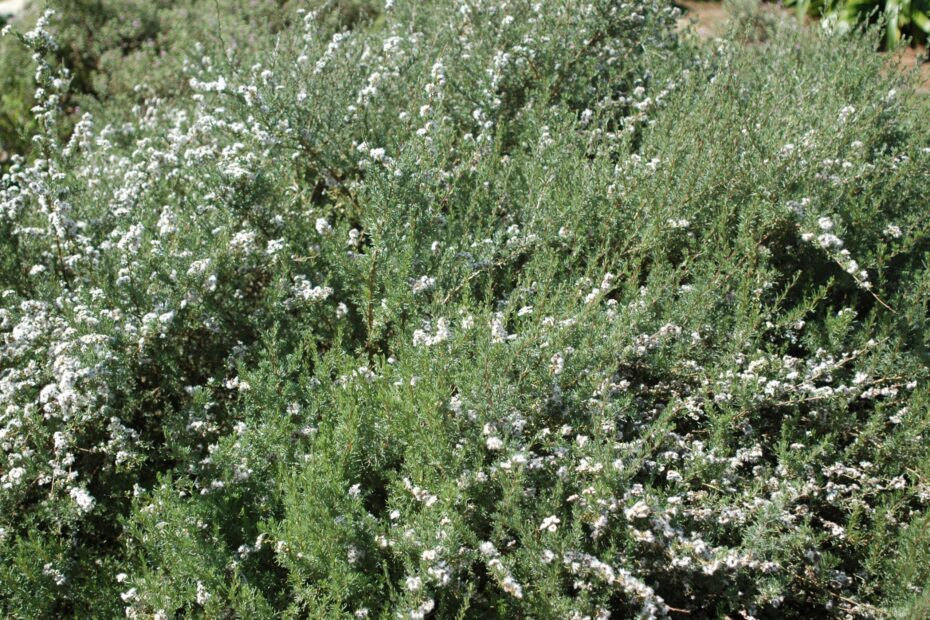
Common Name: Wild Rosemary
Scientific Name: Eriocephalus africanus
Family: Lamiaceae (Mint Family)
Other Names: Wilde Roosmaryn, African Wild Rosemary, Kapokbos
Parts Used: Leaves, flowering tops, essential oil
Plant Type: Aromatic evergreen shrub
Botanical Description
Wild rosemary (Eriocephalus africanus) is a highly aromatic shrub native to the dry regions of southern Africa, particularly the fynbos ecosystems of South Africa. It resembles culinary rosemary in appearance and fragrance but is a distinct species. The plant typically grows 2-3 feet (0.6-0.9 meters) tall with slender, needle-like leaves covered in fine hairs. Small flowers appear in spring, followed by fluffy seed heads resembling tiny cotton tufts.
Crushed leaves release a pleasant scent combining notes of rosemary, pine, eucalyptus, and camphor.
Habitat and Distribution
Native Range: South Africa (Western Cape, Eastern Cape, Karoo regions).
Preferred Habitats: Dry rocky slopes, fynbos vegetation zones, coastal and mountainous areas.
Growing Conditions: Full sun, well-drained sandy soils, low rainfall. Highly drought-tolerant.
Traditional Energetics
- Warming
- Stimulating
- Aromatic
- Drying
- Circulatory stimulant
It is traditionally viewed as a herb that promotes movement and circulation in the body.
Traditional Uses
Indigenous South African communities have used wild rosemary for centuries for:
- Respiratory complaints (colds, influenza, coughs, congestion)
- Fever management
- Digestive discomfort (gas, bloating, sluggish digestion)
- Muscle aches and rheumatic conditions
- Wound cleansing
- General strengthening tonics
Fragrant branches were burned as incense and used to freshen homes and bedding.
Herbal Actions
Respiratory: Expectorant, decongestant, aromatic respiratory tonic. Used for coughs, bronchial congestion, sinus issues, and seasonal discomfort.
Circulatory: Mild circulatory stimulant and warming herb. Supports healthy blood flow and counters feelings of coldness.
Musculoskeletal: Used externally for sore muscles, joint stiffness, rheumatic discomfort, and physical fatigue.
Digestive: Supports digestion, relieves gas and bloating when consumed as a small tea.
Major Constituents & Phytochemistry
- Volatile oils: Camphor, cineole (eucalyptol), α-pinene, limonene, borneol, artemisia ketone, intermedeol, γ-eudesmol, ledol, and other terpenoids/sesquiterpenes/monoterpenes.
- Flavonoids: Quercetin derivatives, luteolin derivatives.
- Other: Polyphenolic compounds, tannins, phenolic acids, antioxidants.
These contribute to its aroma and traditional medicinal properties.
Modern Research Summary
Scientific studies on Eriocephalus africanus are emerging but remain mostly preclinical. Key findings include:
- Antioxidant activity: Strong free-radical scavenging in methanolic extracts (DPPH, FRAP, TEAC assays) due to polyphenols and flavonoids.
- Anti-inflammatory potential: Measurable effects in lab models.
- Antimicrobial activity: Essential oil (especially artemisia ketone) inhibits certain bacteria.
- Antidiabetic potential: Alpha-glucosidase inhibition and improved glucose uptake in cell studies (preliminary).
- Essential oil composition: Dominated by sesquiterpenes and monoterpenes.
Human clinical trials are still needed to validate traditional uses.
Traditional Uses vs. Current Evidence
Traditional Use |
Current Scientific Evidence |
|---|---|
Colds & respiratory support |
Traditional use; no clinical trials yet |
Digestive aid |
Traditional use; limited research |
Fever management |
Traditional use; insufficient evidence |
Antioxidant support |
Supported by laboratory studies |
Inflammation support |
Supported by in vitro studies |
Blood sugar regulation |
Preliminary laboratory support |
Antimicrobial use |
Supported by essential oil studies |
Preparation Methods
Herbal Tea (for respiratory/digestive support)
- 1 tsp dried leaves per cup hot water. Steep 10–15 minutes, strain, and drink.
Steam Inhalation (for congestion)
- Add handful of fresh leaves to hot water. Inhale vapors under a towel for several minutes.
Herbal Bath
- Infuse fresh or dried branches in bathwater for muscle relaxation and aromatic support.
Essential Oil
- Use diluted in massage oils, liniments, aromatherapy blends, or natural cosmetics. Never take internally without professional supervision.
Historical and Cultural Significance
Wild rosemary is valued in South African traditions as a household medicinal plant, cleansing herb, aromatic protector for clothing and bedding, and ceremonial incense. Its fragrance serves both practical and spiritual purposes.
Comparison with Culinary Rosemary (Salvia rosmarinus)
Feature |
Wild Rosemary (E. africanus) |
Culinary Rosemary (S. rosmarinus) |
|---|---|---|
Origin |
Southern Africa |
Mediterranean |
Family |
Lamiaceae |
Lamiaceae |
Aroma |
Rosemary-pine-camphor-eucalyptus |
Strong rosemary |
Culinary Use |
Limited |
Widely used |
Traditional Medicine |
South African herbalism |
Mediterranean herbalism |
Precautions
- Avoid excessive internal use during pregnancy unless advised by a qualified practitioner.
- Do not take essential oil internally without professional supervision.
- Discontinue if irritation or sensitivity occurs.
- Consult a healthcare professional before use if you have serious medical conditions.
Summary
Wild rosemary (Eriocephalus africanus) is a treasured aromatic shrub of southern Africa. It offers traditional support for respiratory health, circulation, digestion, and musculoskeletal comfort while serving as a household aromatic and cleanser. Rich in terpenes, flavonoids, and polyphenols, it shares similarities with Mediterranean rosemary but has its own unique profile. Preliminary research supports its antioxidant, anti-inflammatory, and antimicrobial properties, though more clinical studies are required.
Selected References
- Okaiyeto K, et al. (2022). UPLC-ESI-QTOF-MS Profiling of Phenolic Compounds from Eriocephalus africanus. Molecules.
- Behiry SI, et al. (2020). Toxicity effects of Eriocephalus africanus leaf essential oil. Natural Product Research.
- Merle H, et al. (2007). Chemical Composition of the Essential Oils from Eriocephalus africanus. Flavour and Fragrance Journal.
This article is copyrighted by Ital is Vital, 2016 - 2026. Want to re-post this article? Visit our guidelines.
DISCLAIMER: THIS WEBSITE DOES NOT PROVIDE MEDICAL ADVICE
The information, including but not limited to, text, graphics, images and other material contained on this website are for informational purposes only. The purpose of this website is to promote broad consumer understanding and knowledge of various health topics. It is not intended to be a substitute for professional medical advice, diagnosis or treatment. Always seek the advice of your physician or other qualified health care provider with any questions you may have regarding a medical condition or treatment and before undertaking a new health care regimen, and never disregard professional medical advice or delay in seeking it because of something you have read on this website.